
Child-resistant packaging requirements, explained
If you make or sell anything a child could get into — medicine, household chemicals, and increasingly cannabis — the packaging itself is regulated. "Child-resistant" isn't a marketing adjective; it's a defined test a package has to pass. This guide explains what that means, the standards behind it, and why cannabis turns a single federal idea into fifty moving targets.
THE SHORT ANSWER
Child-resistant (CR) packaging is packaging designed to be significantly difficult for young children to open, while still being usable by adults. In the US the concept comes from the Poison Prevention Packaging Act, with test procedures in 16 CFR 1700 and a package classification in ASTM D3475. The key points:
- CR is a test result, not a claim — a package is child-resistant because it passed a protocol
- It must also be senior-friendly — openable by adults, including older adults
- Cannabis is regulated state by state — each state defines and enforces CR differently
- Certified package ≠ certified design — the distinction decides who holds the evidence
What child-resistant packaging actually is
Child-resistant (CR) packaging — called "special packaging" in the federal statute — is packaging engineered to be significantly difficult for young children to open, or to access a harmful amount of the contents, within a reasonable time, while not being difficult for normal adults to use properly. The definition matters: CR is not a material, a style, or a marketing label. It is a performance standard measured by a test.
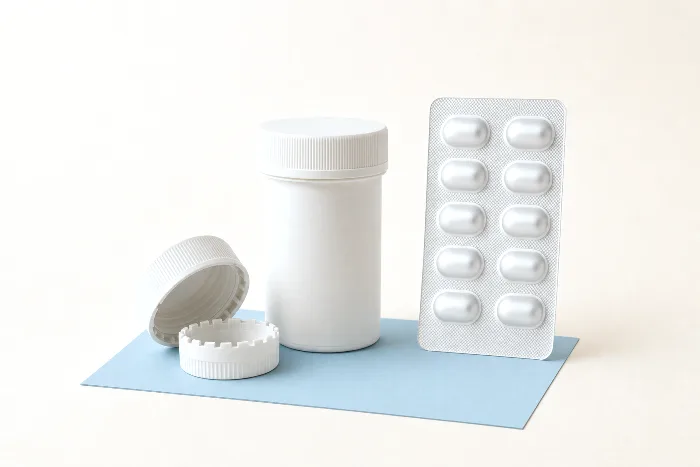
A push-and-turn cap, a squeeze-and-turn closure, a slider bag with a child-resistant zipper, a blister card that resists small fingers — these are common mechanisms, but the mechanism is not what makes a package "child-resistant." Passing the test is. That distinction is the single most important idea in this topic, and it's where most confusion — and most compliance risk — comes from. A closure that looks identical to every certified push-turn cap on the market is not automatically compliant on your product. Child-resistance is a property of the whole package system: the closure, the container, the contents, and how they behave together.
The standards behind CR packaging
In the United States, the foundation is the Poison Prevention Packaging Act (PPPA) of 1970, administered by the Consumer Product Safety Commission (CPSC). The PPPA gives the CPSC authority to require child-resistant special packaging for a list of hazardous household substances and drugs — the reason aspirin, prescription medication, and many household chemicals ship with caps a toddler struggles to open.
The PPPA itself is a law; the operational detail lives in the Code of Federal Regulations. 16 CFR 1700 is the CPSC's set of regulations under the PPPA. Among other things it defines which substances require special packaging and — critically — the test protocol a package must pass. That protocol is built around human panels: groups of young children are given the package and observed to see whether they can open it within set time periods, and groups of older adults are given the same package to confirm ordinary adults can still open and properly reclose it. A package that keeps children out but also defeats seniors does not pass.
ASTM D3475, the "Standard Classification of Child-Resistant Packages," sits alongside the federal rules. It is a classification standard: it catalogs types of child-resistant packages by their opening mechanism and by whether they are reclosable or non-reclosable. A reclosable package — a bottle with a CR cap, a pouch with a CR zipper — has to remain child-resistant every time it is closed again, because the consumer will open and close it many times over the product's life. A non-reclosable package — a unit-dose blister, a single-use sachet — only has to resist the child once, because there is nothing to reclose. ASTM D3475 gives the industry a shared vocabulary for describing which kind of package you have.
Senior-friendly: the other half of the test
It's easy to assume a "child-resistant" package just needs to be hard to open. The opposite is what trips people up: a compliant CR package must be hard for children and easy enough for adults — including older adults — to use. This is the senior-friendly (or "adult-use-effectiveness") requirement. If a closure is so aggressive that seniors can't open it, people transfer the contents into an unregulated container, defeating the entire purpose. The federal test protocol therefore includes a senior adult panel, and a package has to satisfy both sides at once. When you evaluate CR options, "can a child open it?" and "can an older adult open it?" are equally load-bearing questions.
Certified packaging vs. certified designs
Here's a distinction that quietly causes a lot of trouble: there is a difference between a certified CR package and a certified CR design.
A design or component — a particular cap-and-neck combination, a zipper track — may have been tested and shown to be child-resistant in some configuration. But child-resistance is a property of the finished package as a whole. The same certified cap on a different bottle, with a different liner, sealing a different product, is not automatically compliant — it may need its own testing. When a supplier says a closure is "child-resistant certified," the right follow-up is: certified on what package, tested to which standard, and does that evidence transfer to my exact configuration?
For a regulated product, what you generally need is documentation that your finished package, as sold, was tested to the applicable standard — not just that a component exists somewhere with a certificate. Keep the test reports and certifying evidence tied to the specific product. This is exactly the kind of record that becomes hard to reconstruct later if it isn't captured up front.
Why cannabis makes CR a moving target
For traditional drugs and household chemicals, the PPPA provides a single federal baseline. Cannabis is different, and it's where child-resistant packaging becomes genuinely complicated.
Cannabis remains regulated primarily at the state level, and each legal state writes its own packaging rules. Most require some form of child-resistant packaging, but they don't agree on the details. States differ on which standard they reference (some point to the federal 16 CFR 1700 protocol, some to ASTM D3475, some to their own "effectiveness" language), on whether every package or only certain product forms must be CR, and on a stack of additional requirements that have nothing to do with the federal poison-prevention rules — opacity, resealability, mandatory warning symbols, and point-of-sale exit packaging among them. The result is that a package fully compliant in one state can be non-compliant in the state next door.
The table below breaks down the requirements that most commonly vary. Treat it as a map of what to check, not as a statement of any specific state's current rules — those change often, and the specifics are set by each state's regulator.
| Requirement | What it means | Why it varies |
|---|---|---|
| CR certification | The finished package must pass a recognized child-resistant test protocol — often the federal 16 CFR 1700 procedure or an ASTM D3475 package type. | States reference different standards or versions and accept different certifying evidence; some require the finished package to be certified, others accept a certified design. |
| Resealability | Multi-use or multi-serving packages must re-close and stay child-resistant after opening — not only on the first use. | States differ on whether single-use or single-serving packaging is exempt, and on what counts as "resealable." |
| Opacity | The package must be opaque enough that the product inside isn't visible from the outside. | Some states require full opacity, some apply it only to certain product forms, and definitions of "opaque" are not uniform. |
| Warning symbol | A state-specified warning mark or universal symbol (for example, a "contains cannabis" indicator) must appear on the package. | Each state mandates its own symbol, wording, size, color, and placement — they are not interchangeable between states. |
| Exit packaging | Child-resistant bags or containers handed to the customer at the point of sale, in addition to the primary package. | Some states treat the exit bag as the CR boundary; others require the primary package to be CR regardless of the exit bag. |
A few honest caveats about that table. First, these categories interact: a "resealable, opaque, child-resistant, symbol-bearing" package is four separate compliance questions, not one. Second, states revise these rules frequently — a symbol requirement or an opacity threshold can change between license renewals. Third, "exit packaging" means the child-resistant bag a dispensary hands you at checkout; some states treat it as the compliance boundary, others require the primary package itself to be CR regardless. None of this is a place to rely on last year's knowledge.
Keeping per-state requirements straight
Because the requirements are per-state and change often, the only durable approach is to attach the requirements to the product record itself rather than to someone's memory. In PackOS, child-resistant and packaging-compliance attributes live on the SKU record — so the rules that apply to a given product in a given market travel with that product through quoting, artwork, and production, instead of being re-litigated every order. When a state updates a symbol or an opacity rule, you update the record, not a scattered set of files. You can see how this fits the category on our cannabis packaging page.
None of that substitutes for verifying the current rules with each state's regulator and your own counsel — but keeping the requirements structured and attached to the product is what makes that verification a quick check rather than an archaeology project.
Frequently asked questions
What is child-resistant packaging?
Child-resistant (CR) packaging is packaging designed to be significantly difficult for young children to open or access, while remaining usable by adults. In the US the concept comes from the Poison Prevention Packaging Act; a package is "child-resistant" because it passed a defined test protocol, not because of any single design feature.
What is ASTM D3475?
ASTM D3475 is the "Standard Classification of Child-Resistant Packages." It classifies CR packages by their opening mechanism and by whether they are reclosable (must stay child-resistant every time they are closed) or non-reclosable (single-use, resisting the child once). It provides shared terminology and works alongside the federal 16 CFR 1700 test procedures.
Is child-resistant packaging required for cannabis?
In most legal US states, yes — some form of child-resistant packaging is required — but the specifics are set state by state and vary widely. Requirements around opacity, resealability, warning symbols, and exit packaging differ by state and change frequently, so verify the current rules with each state's regulator and your counsel.
What does "senior-friendly" mean?
Senior-friendly (or adult-use-effectiveness) means a child-resistant package must still be openable by adults, including older adults. The federal test protocol checks both sides: children should not be able to open it, and older adults should be able to open and, where relevant, reclose it. A package that defeats seniors does not pass.
Does the same CR packaging work in every state?
Not necessarily. Child-resistance may be tested to a common standard, but cannabis packaging rules — opacity, resealability, required warning symbols, exit packaging — are set per state and differ. A package compliant in one state can be non-compliant in another, so per-state requirements must be verified before you rely on them.