
Matte vs gloss lamination: the honest trade-off
Lamination is the thin clear film bonded over a printed box, carton, or label to protect it — and the biggest choice you make is its finish. Matte or gloss changes how your package looks under the light, how it feels in the hand, and how well it survives the trip to a customer.
THE SHORT ANSWER
Matte vs gloss lamination comes down to one deciding factor: gloss maximizes color and scuff resistance, matte signals premium and hides fingerprints. There is no universal winner. Gloss is the vivid, durable, lower-cost default; matte is the soft, understated choice that photographs as premium but shows scuffs and can flatten deep, dark solids. Choose on brand feel first, then durability.
- Gloss — vivid color, sharp contrast, best scuff and moisture resistance; typically the lowest-cost, most-stocked film
- Matte — soft, low-glare, premium hand-feel; hides fingerprints; but scuffs and scratches show more, especially on dark solids
- Both add rub and moisture resistance versus an unlaminated surface and protect the print underneath
- The hybrid — a matte base with spot gloss (spot-UV) or soft-touch — often beats picking one outright
In a hurry? Try the lamination finish picker → — answer a few questions about your product and brand and it points you to a finish.
What matte and gloss lamination actually are
Lamination bonds a thin, clear plastic film over your printed sheet after it comes off the press. It is not the same as a coating: an aqueous, UV, or varnish coating is a liquid applied and cured on the surface, while a laminate is an actual film laminated on top. Both can be matte or gloss, but film lamination is thicker, tougher, and the version most people mean when they weigh matte vs gloss lamination for a premium box or label. The film also seals the printed area against rubbing and moisture, which is why laminated packaging survives distribution looking better than an unprotected coated sheet.
The matte vs gloss lamination decision is really a decision about how light behaves at the surface of your package. A gloss film has a smooth, reflective surface that bounces light back in a single direction, so colors look deep and saturated and edges look crisp. A matte film has a microscopically textured surface that scatters light in every direction, so the surface looks flat, soft, and low-glare. Nothing about the ink underneath changes — the finish only changes what your eye does with the reflection.
That same film goes over folding cartons, rigid setup boxes, and pressure-sensitive labels. On a label, the laminate sits over the face stock — the printable top layer of the label material — adding rub and moisture resistance the bare face stock would not have. For a deeper look at label-specific options, see our guide to label finishes and laminates; for the carton structures the film wraps, see folding carton styles.
Gloss vs matte: the honest trade-off
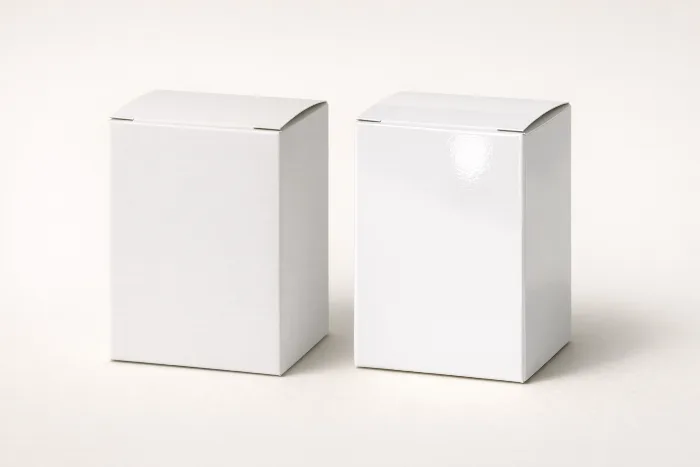
Here is the honest matte vs gloss lamination trade-off, laid out both ways. Neither finish is a universal winner — each genuinely beats the other at something, and the right pick depends on which of those things matters most for your product.
| Factor | Gloss lamination | Matte lamination |
|---|---|---|
| Color & contrast | Deepest, most vivid; whites read brighter, blacks read richer | Slightly muted; can flatten deep, saturated solids |
| Perceived feel | Bright, energetic, retail-forward | Soft, understated, premium |
| Scuff & scratch resistance | Best — the reflective surface masks handling marks | Marks show more, especially on dark solids |
| Fingerprints | More visible on the shine | Hidden well; low-glare surface disguises them |
| Glare & readability | Reflections can fight text under store lights | Low glare; easy to read at any angle |
| Cost | Typically the lower-cost, most-stocked default | Usually a modest premium; soft-touch more so |
| Pairs with spot gloss / foil | Less contrast (already glossy) | Excellent contrast for spot-UV, foil, emboss |
A quick word on where we stand: PackOS is built by Calyx Containers. We manufacture rigid containers and quote labels, flexible packaging, and folding cartons in either finish, so we do not have a finish to sell you. What follows is the trade-off as it really is, not a nudge toward the more expensive option.
Gloss earns its place as the default. It delivers the most vivid color, hides handling marks, resists moisture, and is the cheapest, most widely stocked film. If your brand lives on bold color — snack foods, kids' products, or anything that has to shout on a crowded shelf — gloss is usually right, and there is nothing unsophisticated about it.
Matte earns its premium reputation for real reasons too. The low-glare surface reads as calm, modern, and expensive; it photographs beautifully without hot reflections; and it hides fingerprints far better than gloss. That is why so much beauty, spirits, and premium-tech packaging goes matte or soft-touch. But it comes with a caveat the next section is devoted to — the part most matte vs gloss finish packaging comparisons quietly skip.
The durability reality nobody mentions
Most comparisons stop at "matte looks premium" and never mention the catch: matte shows scuffs. On dark or heavily saturated solids especially, any rub, scratch, or burnish mark stands out as a lighter streak against the flat surface. Slide two matte black boxes past each other in a shipper and you can often see the marks afterward.
Gloss vs matte boxes behave very differently here. A glossy surface is harder to disturb visually — its reflection masks light scratches and handling marks, so a gloss box tends to look fresher after a rough trip through distribution. Soft-touch laminate, the velvety cousin of matte, feels the most premium of all and scuffs the most readily; the soft-touch vs matte choice is really a trade of a little more luxury for a little less resilience.
None of this means avoid matte. It means match the finish to how the package will actually be handled:
- A dark matte box that ships in a mailer and gets opened once will look immaculate.
- The same box in a busy retail bin, restocked and re-faced daily, will collect visible marks.
- A light or mid-tone matte surface hides scuffs far better than a black one — the darker the solid, the harsher the caveat.
If you love the matte look but worry about wear, the fix is usually not gloss — it is a hybrid.
Hybrid moves: matte plus spot gloss and soft-touch
The most effective finishing decisions are rarely all-matte or all-gloss. The classic move is a matte or soft-touch laminate as the base, with spot gloss (spot-UV) applied only over a logo, product name, or hero graphic. The glossy element catches the light and lifts off the matte field, giving you the premium hand-feel and a focal point that pops. It also puts the shine exactly where you want fingerprints least — on a small graphic rather than the whole panel.
Matte and soft-touch bases also make the best partners for foil stamping and embossing, because the flat, non-competing surface throws the metallic or raised element into sharp relief. See specialty print finishes for how spot-UV, soft-touch, emboss, and deboss stack together, and foil stamping explained for the metallics specifically. The takeaway: if the matte vs gloss lamination question feels like a compromise either way, a hybrid usually resolves it — and it is where a lot of the best-looking packaging actually lands.
Matte or gloss lamination by package type
The matte or gloss lamination for boxes conversation plays out a little differently across formats. The physics of the film is the same; what changes is how the format is handled and what the substrate underneath is doing.
- Folding cartons and rigid boxes — both finishes are routine. Gloss for color-forward retail; matte or soft-touch for premium unboxing. Watch scuffing on dark rigid setup boxes that get handled at retail.
- Pressure-sensitive labels — gloss laminate over a gloss face stock gives the punchiest bottle or jar label; matte reads craft and artisanal. A matte label over a textured face stock is a common premium-spirits look.
- Flexible packaging and pouches — matte films are popular for a premium, low-glare pouch, but the same scuff caveat applies on dark solids that flex and rub against each other in transit.
Whatever the format, the finish rides on top of good print — deep, even solids depend on solid color management. If your dark solids look weak under matte, the fix may be press setup and color rather than the laminate; our notes on packaging color management cover that side.
How to pick your finish
Everything in the matte vs gloss lamination debate can be reduced to a few questions:
- What should the brand feel like — energetic and vivid, or quiet and premium?
- How much will the package be handled, and is it a dark solid? If yes to both, lean gloss or add a hybrid.
- Do you want a focal element to pop? If yes, a matte base with spot gloss is the move.
- How tight is the budget? Gloss is the economical default; matte and soft-touch are a step up.
If you want a fast, structured answer, run your specifics through the lamination finish picker — it weighs brand feel, durability, package type, and decoration and points you to a finish. This piece is part of our guide to choosing the right packaging, the PackOS decisions guide.
How PackOS handles finish on a quote
Finish is one of the specs PackOS reads and prices. When you upload artwork or a spec, it detects the structure and dimensions, and the finish — matte, gloss, soft-touch, or spot gloss — becomes part of the instant quote, because the film and any extra pass both affect cost and lead time. You can see how the detection works on the technology page, or price your own file in either finish with Quick Quote. Because we do not sell a single press or a single finish, the recommendation you get is about your product, not our inventory.
Frequently asked questions
Is matte or gloss lamination better?
Neither is universally better — it depends on your priority. Gloss lamination gives the most vivid color, the sharpest contrast, and the best scuff and moisture resistance, and it is usually the lowest-cost option. Matte lamination reads as more premium, softens glare, and hides fingerprints, but it shows scuffs and scratches more readily and can flatten deep, dark solids. Decide on brand feel first, then durability.
Does matte lamination scratch more than gloss?
Generally yes. A matte surface shows scuffs, scratches, and burnish marks more visibly than gloss, especially on dark or saturated solids where any rub mark stands out. Gloss hides handling marks better because its reflective surface is harder to disturb visually. Soft-touch laminate feels the most premium but is the most prone to showing marks.
Can you combine matte and gloss on the same package?
Yes, and it is one of the most effective finishing moves. A common approach is a matte laminate base with spot gloss (spot-UV) raised over a logo, product name, or graphic, so the glossy element pops against the matte field. Matte or soft-touch bases also pair well with foil stamping and embossing for contrast.
Which lamination is cheaper, matte or gloss?
Gloss lamination is typically the more economical choice because gloss film is the most widely stocked and the default on most presses. Matte and especially soft-touch films usually carry a modest premium. Exact cost depends on the material, size, quantity, and decoration, so the reliable way to compare is a real quote.
Which finish is best for dark or black boxes?
This is where the honest caveat matters most. Matte and soft-touch look striking on dark boxes but show fingerprints, scuffs, and scratches the most on those same dark solids. If a dark package will be handled a lot, gloss hides marks better; if the unboxing look matters more than wear, matte wins. A matte base with spot gloss is a common compromise.