
Tamper-evident packaging: seals, bands & where it's required
A foil seal you have to peel, a plastic ring you have to snap, a band you have to tear — these are tamper-evident features, and for a lot of products they aren't optional. Here's what tamper-evidence actually is, how the common mechanisms work, and the categories where it's expected.
THE SHORT ANSWER
Tamper-evident packaging is any feature that gives a visible, irreversible sign that a package has been opened before the customer buys it. It doesn't stop someone from opening the package — it makes the fact that they did impossible to hide, so a shopper can see at a glance whether the seal is intact.
- Reveals, not prevents — the point is to make tampering obvious, not impossible
- Not the same as child-resistant — that's about keeping children out, a different job
- Common mechanisms — induction seals, shrink bands, breakaway caps, blisters, void labels
- Expected or required across OTC drugs, many foods, supplements, and cannabis
Not legal advice. This article explains tamper-evidence in general terms. Whether a given product must carry a tamper-evident feature — and which one — depends on the product category, the market, and rules that change over time. Confirm the current requirements with the relevant authority (for example the U.S. FDA or the CPSC) and qualified counsel before you finalize a package.
What tamper-evident packaging is (and why it exists)
A tamper-evident feature is anything on a package that gives a clear, one-way signal that the package has been opened. Peel a foil membrane, snap a plastic ring, tear a shrink band — once the action is done, the feature can't be returned to its original state without leaving obvious evidence. That broken, missing, or disturbed element is the message: someone got here first.
The distinction that matters most is this: tamper-evidence reveals interference; it does not prevent it. A determined person can open almost any package. The job of a tamper-evident feature is to make sure that if they do, the next person to pick it up can tell. This is why practitioners avoid the word "tamper-proof" — no package is truly proof against opening, and the term promises more than any seal can deliver. The honest, accurate term is tamper-evident.
The modern practice traces to a wave of product-tampering incidents in the early 1980s, after which US regulators moved to require tamper-evident features on most over-the-counter medicines. Since then, an intact seal has become a basic, expected sign of safety on the shelf — a buyer who finds a broken band or a peeled foil is expected to reject the unit and alert the retailer. The feature only works because that expectation is universal.
Tamper-evident vs. child-resistant: two different jobs
Tamper-evidence and child-resistance get confused constantly, because they often appear together on the same bottle — a childproof cap over a foil-sealed mouth. But they answer completely different questions. Child-resistance asks: can a young child get in? It's a design property proven by protocol testing with panels of children and adults. Tamper-evidence asks: has anyone already been in? It's a signal, not a barrier. For the full picture on the first of those, see our guide to child-resistant packaging requirements.
Because they're independent properties, a package can be one, the other, both, or neither:
- A shrink band around a cap is tamper-evident but does nothing to resist a child.
- A plain continuous-thread screw cap with no seal is neither.
- A push-and-turn CR cap over an induction seal is both — child-resistant and tamper-evident.
- A peel-push blister can deliver both at once, per cavity.
The takeaway: don't assume a child-resistant closure is also tamper-evident, or vice versa. Many regulated products need both, and you have to specify each one deliberately.
Where tamper-evidence is expected or required
Whether tamper-evidence is legally required, merely expected by retailers, or simply good practice depends entirely on the product category and the market. The rules also change over time. Treat the categories below as a general map, not a compliance checklist, and verify current requirements with the authority that governs your product.
- Over-the-counter (OTC) drugs. In the United States, most OTC medicines are generally required to carry a tamper-evident feature under FDA regulations. This is the category where the requirement is most firmly established.
- Foods and beverages. Many food products — especially ready-to-eat items and anything consumed directly from the pack — are expected or required to show evidence of first opening. General food-contact and safety rules also apply; see food packaging regulations.
- Dietary supplements. Supplements are generally regulated as food in the US, and tamper-evidence along with an induction seal is common practice and often expected.
- Cannabis products. State-run cannabis programs commonly require tamper-evident packaging — often alongside child-resistance — but the specifics vary widely by state and change frequently.
This ties into the broader compliance picture: tamper-evidence is one requirement among several (labeling, child-resistance, material rules) that a regulated package has to satisfy at once. It's part of our practical guide to US packaging compliance, which walks through how these obligations stack up. Because none of these rules are static, review your packaging against the current authority guidance periodically rather than once.
The common tamper-evident mechanisms
There's no single "correct" tamper-evident feature — the right one depends on the container, the closure, and how the product is filled. These are the mechanisms you'll encounter most often, and how each one shows that a package has been opened.
| Mechanism | How it shows tampering | Fits |
|---|---|---|
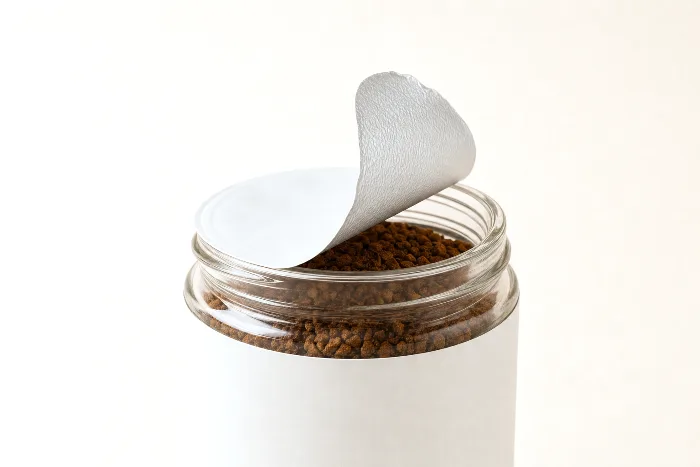
| Induction seal | A foil membrane is heat-bonded to the container mouth under the cap; the buyer must peel or puncture it to open, and it can't be reapplied cleanly. | Bottles and jars — supplements, food, personal care |
| Shrink band / sleeve | A printed plastic band shrunk over the cap-to-neck joint (or a full-body sleeve); it must be torn or cut to remove and can't be restored. | Beverages, supplements, spirits; caps and pump closures |
| Breakaway cap ring | A ring of the closure stays behind on the neck when the cap is first twisted off; the broken bridges are visible proof of opening. | Beverage and many screw-cap bottles |
| Blister / unit-dose | Each dose sits in a sealed formed cavity; a used or breached cavity is obvious, giving tamper-evidence per unit. | Tablets, capsules, single-dose products |
| Void / tape label | A destructible or "VOID"-revealing label bridges the opening; removing or lifting it tears the label or leaves a permanent mark. | Cartons, boxes, pouches, flap closures |
A few practical notes. The induction seal is one of the most widely used features on rigid containers because it does two jobs — a fresh, hermetic barrier and a clear tamper signal — in one step at the filling line. Shrink bands are versatile: they wrap almost any closure shape and double as extra print real estate. Breakaway rings are so common on beverages that consumers read a broken ring subconsciously. Blisters give the strongest per-dose evidence, which is why they're favored for pharmaceuticals and sampling. And void labels are the go-to for flexible packaging and folding cartons that have no cap to seal.
Combining tamper-evidence with child-resistance and dispensing
Tamper-evidence rarely lives alone. On a real package it usually shares the closure system with a dispensing function and, for regulated goods, child-resistance — and those requirements interact. The closure is where they all meet, so it pays to design the whole system together rather than bolt a seal on at the end. Our guide to caps and closures covers the closure side in depth; a few common combinations:
- CR cap + induction seal. The classic supplement and pharmacy setup — a push-and-turn or squeeze-and-turn closure for child-resistance, over a foil seal for tamper-evidence and freshness.
- Dispensing closure + shrink band. A flip-top, pump, or dropper (which can't be induction-sealed the same way) paired with a shrink band across the closure to prove first opening.
- CR blister. A peel-then-push backing that resists small children while making each opened cavity self-evident — one component doing two regulatory jobs.
- Carton + void seal. A secondary folding carton closed with a destructible tamper label, often over a primary container that carries its own child-resistant closure.
The design tension is real: a seal that's genuinely hard to defeat can also frustrate the legitimate user, and a dispensing closure narrows your sealing options. The goal is a package that's obvious when tampered, openable by the intended adult, and — where required — resistant to a child, without any one of those goals quietly undermining the others.
How PackOS handles tamper-evident specs
Tamper-evidence is a spec decision that ripples through the whole package — the closure, the neck finish, the fill line, and the artwork on any band or label. When you bring a container and closure into PackOS, it reads the structure and surfaces those decisions as part of the quote, so a shrink band, an induction seal, or a printed void label is priced and proofed alongside the rest of the package rather than discovered late. You can see how the platform inspects and models packaging on the technology page, or put a real spec through it with Quick Quote. Just remember that the platform prices and renders what you specify — confirming which tamper-evident feature your category actually requires is a step to take with the relevant authority.
Frequently asked questions
What is tamper-evident packaging?
Tamper-evident packaging is any feature that gives a visible, irreversible indication that a package has been opened or interfered with before it reaches the consumer. It does not stop someone from opening the package — it makes the fact that they did impossible to hide, so a shopper can see at a glance whether the seal is intact.
Is tamper-evident packaging the same as tamper-proof packaging?
No. There is no such thing as truly tamper-proof packaging, because any package can eventually be opened. Tamper-evident is the accurate term: the goal is to make tampering obvious, not impossible. The phrase tamper-proof is best avoided because it promises more than any package can deliver.
What is the difference between tamper-evident and child-resistant packaging?
They solve different problems. Child-resistant packaging is designed to be difficult for young children to open, and it is verified by testing with panels of children and adults. Tamper-evident packaging shows whether a package has already been opened. A package can be one, the other, both, or neither, and many regulated products need both at once.
What products are required to have tamper-evident packaging?
Requirements vary by product category and jurisdiction, so this is general and not legal advice. In the United States most over-the-counter drugs are generally required to carry tamper-evident features under FDA regulations, and many foods, dietary supplements, and cannabis products are expected or required to as well. Always verify the current rules with the relevant authority.
What is the most common tamper-evident seal?
The induction seal, a foil membrane bonded to the container mouth under the cap, is one of the most common, especially on bottles and jars. Other widely used mechanisms include shrink bands around the closure, breakaway rings on caps, blister packs, and printed void or tape labels that leave a mark when removed.