
Cannabis edibles packaging: compliant and food-safe
Cannabis edibles are the hardest packaging problem in the category: a gummy is both a food and an intoxicant that looks like candy, so the package has to satisfy food-safety rules and cannabis rules at the same time. Here's what that takes — and the formats that get there.
THE SHORT ANSWER
Cannabis edibles packaging has to clear two bars at once: it must be food-safe and cannabis-compliant. In practice that means child-resistant packaging, resealability for multi-dose products, accurate dose and serving marking, food-contact-safe materials, and a design that does not appeal to children — all in one package. The specifics are set state by state and change, so every rule below is a general pattern to verify with the authority in each market.
- Child-resistant is effectively mandatory — and often must stay child-resistant after reopening
- Multi-dose products generally need to be resealable and remain child-resistant
- The product-contact layer must be food-grade, not just compliant with cannabis rules
- Packaging can't be designed to appeal to children — no candy look-alikes or cartoons
- Rules vary by state and change — confirm with the regulator before you print
Not legal advice. This article explains general packaging patterns for cannabis edibles. There is no single federal framework for adult-use cannabis in the United States, and packaging and labeling requirements are set state by state — they differ between markets and change often. Treat everything here as a starting point, and verify the current rules with your state's cannabis regulator and your own counsel before you commit artwork or tooling.
The double burden: food-safe and cannabis-compliant
Most cannabis formats answer to one rulebook. Edibles answer to two. A gummy, chocolate, or beverage is a consumable, so its packaging has to be food-safe the same way any snack's would be — the material that touches the product can't leach anything harmful into it. At the same time it's a regulated cannabis product, so it also has to be child-resistant, marked with dose and warning information, tamper-evident, and designed so it can't be mistaken for ordinary candy. Neither rulebook cancels the other; you have to satisfy both in the same package.
That overlap is where brands most often get tripped up. A structure can be perfectly food-grade and still fail a cannabis inspection because it's resealable but not child-resistant, or it can nail the child-resistant closure and still be unsellable because the graphics look too much like a mainstream candy brand. This guide walks the requirements one at a time. It's a spoke of the complete guide to cannabis packaging, which covers every product type; here we go deep on edibles specifically.
Child-resistant and resealable at once
Child-resistance is the non-negotiable of edibles packaging. Because an edible looks and tastes like food, regulators treat it as one of the highest accidental-ingestion risks in the category, and nearly every legal market requires edibles to ship in child-resistant packaging. Many go further and require the package to stay child-resistant after it's been opened and reclosed — which is a much harder specification than a one-time seal. For the mechanics of what "child-resistant" actually means and how it's tested, see our guide to child-resistant packaging requirements.
The reseal requirement is what makes edibles distinct from most other cannabis packaging. A single-serving edible can use a one-time opening, because once the dose is gone there's nothing left to protect. But a package that holds several servings has to be reclosable — a partly eaten bag of gummies left on a counter is exactly the scenario the rules are written for. So multi-dose edibles converge on a short list of structures:
- Child-resistant zipper pouches — a press-to-close mechanism that requires the same adult-directed motion to reopen every time.
- Reclosable child-resistant jars and tins — push-and-turn or squeeze-and-turn lids that reset their child-resistance on every close.
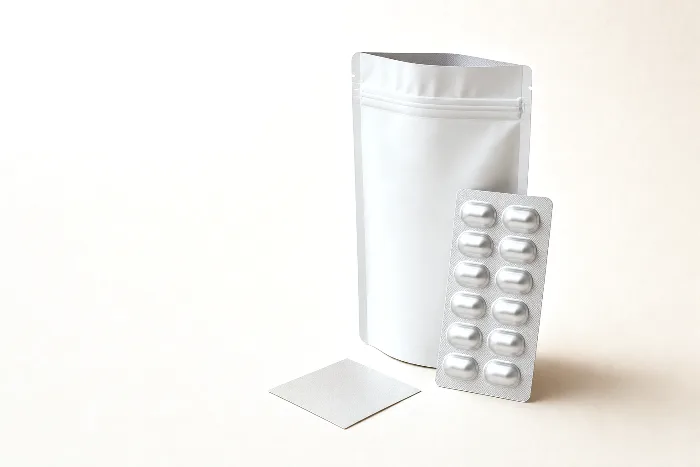
- Cartons holding a child-resistant blister or inner pack — where each cavity is its own single-dose, child-resistant unit and the outer carton carries the graphics.
Tamper-evident — a feature that gives visible proof a package was opened, such as a shrink band, induction seal, or breakaway ring. It is separate from child-resistance: one shows interference, the other slows a child down. Edibles usually need both. See more terms in the packaging glossary.
Dose marking and the appeal-to-children rule
Edibles carry more required information than almost any other cannabis format, because dosing is the whole safety story. As a general pattern across markets, the packaging or label has to state the amount of THC (and often CBD) per serving and per package, mark how many servings the package contains, and carry the market's universal cannabis or intoxicating-product symbol plus its mandated warnings. Some markets also require a scored or otherwise divisible product so a single serving can be separated cleanly. None of this is uniform — the exact symbol, the per-package THC ceiling, the warning wording, and the type sizes are all set per market. We keep the labeling detail in cannabis packaging requirements, state by state; treat the list here as the shape of the problem, not the letter of any one law.
The other rule that hits edibles harder than any other format is the prohibition on packaging designed to appeal to children. Because a gummy or chocolate bar is inherently kid-friendly as a product, regulators scrutinize the graphics closely. Most legal markets generally prohibit cartoon characters, imitation of existing candy or snack brands, and bright, child-focused styling, and some restrict specific shapes or the words used to describe the product. The intent is consistent everywhere — an edible shouldn't be mistakable for an ordinary treat — but the specific banned elements vary by state, so the safe design brief is deliberately conservative: no look-alikes, no cartoons, clear cannabis identification.
Food-contact materials: the part people forget
It's easy to spend all your attention on the cannabis rules and forget that an edible is still food. Whatever layer touches the product — the inner film of a pouch, the resin of a jar, the coating on a carton's inner blister — has to be a food-contact material suitable for that use. In the US, food-contact substances are governed under FDA rules, and the practical obligation on a brand is to specify food-grade structures and to keep documentation from suppliers showing the materials are appropriate for the product. This matters more for edibles than for a dry snack, because many edibles are oily, sugary, acidic, or infused with cannabis extract in a fat carrier, and those chemistries can interact with the wrong film or liner over a long shelf life.
The cannabis compliance layer sits on top of this food-safety baseline rather than replacing it — a package can be flawlessly child-resistant and still be the wrong choice if its contact layer isn't food-grade for an infused, high-fat product. Our primer on food packaging regulations covers the food-contact and allergen basics that apply here just as they would to any confection. When in doubt, the contact material is the first thing to nail down and the last thing to substitute cheaply.
Edibles formats compared
Once the requirements are settled, the format choice comes down to dose count, moisture sensitivity, and how the product is merchandised. These are the workhorse structures for edibles and how they trade off:
| Format | Reseal | Notes |
|---|---|---|
| CR mylar pouch | Reclosable (child-resistant zipper) | Light, high moisture and light barrier, low ship weight; best for multi-dose gummies and chews. Built like any high-barrier stand-up pouch with a child-resistant closure. |
| CR jar | Reclosable (child-resistant lid) | Rigid moisture barrier and strong shelf presence; suits sticky or fragile pieces that shouldn't be compressed. Heavier and more material per unit. |
| CR carton with blister | Per-cavity, single use | Large printable surface for compliance copy and branding; the child-resistant blister gives unit dosing and tamper-evidence per cavity. Good for precise single servings. |
| CR tin | Reclosable (child-resistant lid) | Durable, fully opaque, premium feel; protects product from light and crushing. Highest material weight and cost of the four. |
In practice, high-count gummy and chew products lean toward child-resistant pouches for cost and shelf efficiency; premium or single-dose products lean toward jars, tins, and cartons that present better and support precise dosing. Moisture-sensitive edibles often add a desiccant regardless of format. Many brands run more than one format across a line — a resealable pouch for the everyday multipack, a carton-and-blister for a precisely-dosed premium item.
Opacity, appeal, and shelf restrictions
Beyond the closure and the copy, several markets add rules about what the package can show. Some require opacity so the product isn't visible on the shelf, some restrict or standardize the graphics further, and many control how and where products can be merchandised in the dispensary. The through-line is the same appeal concern that governs the graphics: keep the product from reading as an ordinary snack. Practically, that means an edibles design brief starts from the compliance constraints and works outward, rather than starting from a mainstream-candy look and trying to sand off the parts that fail.
It also means a brand selling into more than one state is really designing a family of related packages, not one package. The symbol, the warnings, the opacity requirement, and the per-package limits can all differ from market to market, so the artwork has to flex without the structure or the brand falling apart. That variant-management problem is the real work of scaling an edibles line, and it's where a lot of hand-built artwork breaks down.
How PackOS handles compliant edibles packaging
PackOS treats an edibles package as a structure plus a separable, per-market compliance layer. When you upload artwork or a die file, it detects the structure — pouch, jar, carton, or blister card — rebuilds an editable parametric dieline, and keeps the regulated elements (symbol, warnings, dose panel) on their own layer so a state-by-state variant is a data change rather than a full redraw. From that it produces a photoreal 3D proof and an instant quote, and it preflights the file so the cut, crease, and print separations are production-ready. You can see the reconstruction run on the technology page, and read how we support regulated brands on our cannabis solutions page.
The payoff is speed without losing the compliance thread: because the strictest-common-denominator structure and the separable label layer are modeled explicitly, adding a market or fixing a warning doesn't mean rebuilding the package. Get us the artwork — even rough — and you'll see the format, the dieline, and the price in about a minute, with the food-safe and cannabis-compliant constraints already in the frame.
Frequently asked questions
Does cannabis edibles packaging have to be child-resistant?
In nearly every US state with a legal market, cannabis edibles must be sold in child-resistant packaging as a general rule. Because edibles look and taste like ordinary food or candy, regulators treat them as a high accidental-ingestion risk, so most markets require child-resistance and often that the package stay child-resistant after it is reopened. Confirm the exact standard with your state authority, because the rules differ by market and change over time.
Can cannabis edibles packaging be resealable?
Yes, and for multi-serving products it usually needs to be. When one package holds several doses, many markets require it to be resealable and to stay child-resistant through repeated openings, which points to child-resistant zipper pouches or reclosable child-resistant jars rather than a single-use seal. A single-serving edible can use a one-time opening because there is nothing left to protect after the first use.
What makes edibles packaging food-safe?
Food-safe edibles packaging uses food-contact materials that are suitable for their intended use under FDA rules, so nothing harmful migrates from the packaging into the product. In practice that means specifying food-grade films, jars, and liners and keeping documentation from your supplier. The cannabis rules sit on top of this food-safety baseline rather than replacing it.
Why can't cannabis edibles packaging look like candy?
Most legal markets prohibit cannabis packaging that is designed to appeal to children, which generally rules out cartoon characters, imitation of existing candy brands, and bright child-focused styling. The goal is to keep edibles from being mistaken for ordinary treats. The specific prohibited elements vary by state, so verify the standard for each market you sell in.
What formats work for cannabis edibles?
The common formats are child-resistant mylar pouches, child-resistant jars, and cartons that hold a blister or inner pack. Pouches are light and reclosable, jars suit gummies and chews that need a rigid moisture barrier, and cartons add printable surface area and can carry a child-resistant blister for unit dosing. The right choice depends on dose count, moisture sensitivity, and how the product is merchandised.