
Beverage packaging: bottles, cans & labels
Water, coffee, kombucha, seltzer, cold brew, a kids' juice pouch — every drink you buy sits inside a container that was chosen for a reason. This guide walks the main beverage formats and the labels, sleeves, and closures that finish them.
THE SHORT ANSWER
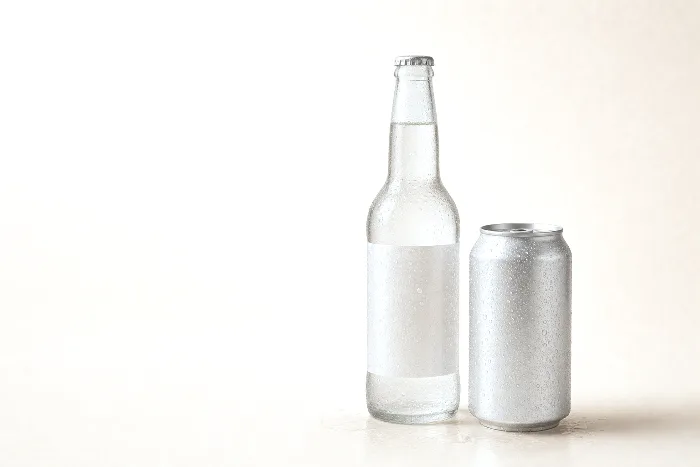
Beverage packaging is the system of primary container, closure, and decoration that holds a drink, protects it, and sells it. The format follows the drink: PET and glass bottles, aluminum cans, cartons, and spouted pouches each suit different carbonation, shelf-life, and shelf-presence needs — and each is finished with pressure-sensitive labels, shrink sleeves, or direct print.
- Bottles (PET and glass) — versatile and resealable; glass reads premium
- Cans (aluminum) — light, opaque, endlessly recyclable, great under pressure
- Cartons (gable-top and aseptic) — shelf-stable juices, dairy, and plant-based drinks
- Spouted stand-up pouches — light, low-cost, on-the-go
- Decoration — pressure-sensitive labels, shrink sleeves, or direct print on the container
The beverage packaging job
A beverage pack has a short list of demanding jobs. It has to contain a liquid without leaking, weeping, or reacting with it. It has to protect the drink from oxygen, light, and — for carbonated products — hold internal pressure. It has to survive the cold chain: chilling, ice, condensation, and often a commercial cooler. And it has to sell, which means the container shape and the graphics do a lot of the brand's work on a crowded shelf. This piece is part of our complete guide to food & beverage packaging; here we zoom in on drinks specifically.
The reason there is no single "best" beverage package is that these jobs pull in different directions. Carbonation rewards cans and glass; premium positioning rewards glass; freight cost and breakage risk reward plastic and cans; shelf-stable ambient distribution rewards cartons. Most decisions come down to matching the drink's chemistry and the brand's economics to a format that can carry the graphics you want.
The main beverage formats at a glance
Five families cover the overwhelming majority of drinks. Here is what each is best at and how it is usually decorated.
| Format | Best for | Typical decoration |
|---|---|---|
| PET bottle | Water, soft drinks, sports and functional drinks | Pressure-sensitive label, full-body shrink sleeve, or direct print |
| Glass bottle | Beer, spirits, premium sodas, kombucha, cold brew | Pressure-sensitive label, applied ceramic / direct print, sleeve |
| Aluminum can | Beer, soda, seltzer, energy, functional beverages | Direct print on the can body, or a shrink sleeve on the sleek can |
| Gable-top / aseptic carton | Juice, milk, plant-based drinks, broths | Direct print on the paperboard (flexo or offset) |
| Spouted stand-up pouch | Kids' drinks, purees, on-the-go and single-serve | Roto/flexo print on the laminated film |
A few notes on the trade-offs behind that table. Cans are opaque by default, so they protect against light without any extra barrier, and aluminum takes internal pressure well — which is why seltzer and beer moved so heavily to cans. Glass is inert and premium, but it is heavy and breakable, which drives freight and secondary-packaging cost. PET is light, clear, and resealable, which is why it dominates water and many still drinks. Cartons win when a juice or dairy product needs to sit on an ambient shelf for months. Spouted pouches are the lightest and cheapest per unit and pack flat — closer cousins of the formats in our snack packaging guide than of a rigid bottle.
Decorating a beverage: labels, sleeves, and direct print
Once the container is chosen, the next decision is how the graphics get onto it. There are three broad routes, and the right one depends on the container material, the shape, the run length, and how much of the surface you want to cover.
- Pressure-sensitive labels. A printed, adhesive-backed film or paper applied to one area of the container. They are flexible, relatively low commitment, and easy to change between SKUs — the everyday choice for bottles and jars. Sizing a wrap or front-and-back label to the container is its own small discipline; see our label sizes guide.
- Shrink sleeves. A printed tube that slides over the container and shrinks with heat to hug its full contours. Sleeves give 360-degree coverage, wrap compound curves a flat label can't, and can carry a built-in tamper band over the cap. They shine on contoured bottles and the "sleek" can. Read the full mechanics in our shrink sleeve labels guide.
- Direct print. Graphics printed straight onto the container — on the aluminum can body, on carton paperboard, or as applied ceramic labeling on glass. There is no separate label to apply, which is efficient at volume, but it is the least flexible route for short runs and frequent artwork changes.
A useful way to choose: if you need full coverage or a tamper band and the shape is contoured, lean toward a shrink sleeve; if you want simplicity, easy SKU changes, and a defined print area, lean toward a pressure-sensitive label; if you are printing at high volume on cans or cartons, direct print is usually already the format's native decoration.
Labels that survive ice, condensation, and the cooler
Beverages punish labels in ways that dry-goods packaging never does. A drink is chilled, then pulled from a cooler into warm air, so it sweats. It may sit in an ice bath at an event, get dunked in a bucket, or ride through a wet filling line. Uncoated paper labels wick that moisture, wrinkle, and lift at the edges. That is why beverage decoration leans on moisture-resistant films — BOPP, PE, and clear "no-label look" stocks — over adhesives rated for cold, wet application.
Two application details matter as much as the film. First, the drink is often cold when the label is applied on the filling line, and not every adhesive keys well to a cold, damp surface — this is a specific adhesive class. Second, if the bottle is washed or returned for reuse, the label and adhesive have to be chosen to either survive or wash off cleanly, depending on the goal. The material decision sits at the center of all of this; our label materials guide walks paper versus BOPP versus vinyl and the adhesive families in more depth.
Necks, closures, and how the drink is filled
The opening of a beverage container is a spec, not an afterthought. A bottle's neck finish — the diameter and thread pattern at the top — determines which closures will actually fit and seal. A closure that is a thread pitch off will not seal, and a carbonated product will lose pressure. If you are choosing or matching a bottle, our bottle types guide explains neck finishes and why the closure has to match the thread spec.
Closures for drinks fall into a few buckets, and the right one is tied to the product:
- Continuous-thread caps — the standard screw cap for still water, juice, and most non-pressurized drinks.
- Carbonation-rated closures — heavier, gasketed caps and crown caps that hold internal pressure on soda, seltzer, and beer.
- Sports and dispensing closures — push-pull, flip-top, and valve caps for on-the-go hydration and sports drinks.
- Can ends — the seamed aluminum end with its integral tab; the "closure" and the container are formed together.
- Carton fitments — screw-cap spouts on gable-top and aseptic cartons, or the straw port on a juice box.
Fill temperature is the other quiet driver. Hot-fill products (some juices and teas) go in hot and create a vacuum as they cool, which the container and closure have to handle. Aseptic and cold-fill lines have their own requirements. You do not need to master the filling line to spec a pack, but the format, the closure, and the label material all have to agree with how the drink is put in.
Sustainability and recycled content
Beverages are one of the most visible packaging categories, so material choices get scrutinized. The honest picture is that the common formats are all recyclable in principle, and none is a clean winner — the real outcome depends on local collection and on the choices you make around the container.
- Aluminum cans can be recycled repeatedly with strong material recovery, and they are collected in most curbside programs.
- PET bottles are widely collected and commonly recycled into new bottles and other products; rPET (recycled PET) lets a brand cut virgin plastic, subject to supply and food-contact approval of the recycled stream.
- Glass is infinitely recyclable and inert, but heavy — its footprint story is dominated by weight and the freight that weight causes.
- Cartons combine paperboard with thin plastic and sometimes aluminum layers, which are recyclable but depend on carton-recycling access in the region.
One decoration caveat worth flagging: a full-body shrink sleeve can complicate a bottle's recyclability unless the sleeve is designed to separate — washable-ink or perforated, tear-away sleeves exist precisely to keep the container recyclable. If sustainability is a goal, treat the label or sleeve as part of the recyclability decision, not a cosmetic add-on. Claims about recyclability and recycled content are also regulated, so keep them specific and verifiable rather than vague.
How PackOS helps you spec a beverage pack
Where PackOS fits is the artwork and the quote. Upload a label, a sleeve, or a die file and it detects the structure, dimensions it, and checks it against print-readiness — bleed, safety, and the wrap dimensions a bottle or can label needs — then produces a proof and an instant price. Because the label geometry and the container are understood together, a change to the bottle or the label size reflows the rest. You can watch the reconstruction on the technology page, see how we approach the category on our food & beverage page, or try it on a real file with Quick Quote.
Frequently asked questions
What is the most common beverage packaging format?
There isn't one single answer — it depends on the drink. PET plastic bottles dominate water and many soft drinks, aluminum cans lead in beer, soda, and increasingly seltzer and functional drinks, glass is standard for premium and many carbonated categories, and cartons handle shelf-stable juices and dairy. The right format is set by carbonation, fill temperature, shelf life, and how the brand wants to look on shelf.
What is the difference between a shrink sleeve and a pressure-sensitive label on a bottle?
A pressure-sensitive label is a printed, adhesive-backed film or paper applied to one area of the container. A shrink sleeve is a printed tube that slides over the container and shrinks with heat to hug its full contours, giving 360-degree coverage and the ability to wrap compound curves. Sleeves cover more area and can add a tamper band, while pressure-sensitive labels are simpler and often lower cost.
Do beverage labels need special material to survive ice and condensation?
Usually yes. Drinks are often chilled, sit in ice, or sweat with condensation, so beverage labels typically use moisture-resistant films such as BOPP or PE rather than uncoated paper, paired with adhesives rated for cold, wet application. If the container is washed or reused, or the label has to survive an ice bucket, that pushes the material and adhesive choice further.
Is aluminum or PET more recyclable for beverages?
Both aluminum and PET are widely recyclable and both are collected in most curbside programs, so neither is a simple winner. Aluminum can be recycled repeatedly with strong material recovery, and PET is commonly recycled into new bottles and other products. Real-world outcomes depend on local collection, how the label or sleeve is chosen, and whether the container is designed to stay recyclable.
What is rPET?
rPET is recycled polyethylene terephthalate — PET plastic made partly or wholly from post-consumer recycled material instead of virgin resin. Many beverage brands use rPET to cut the amount of new plastic in a bottle. How much recycled content a pack can carry depends on supply, food-contact approval for the recycled stream, and the clarity and strength the container needs.