
Offset lithography for packaging: folding cartons and litho-lam
If your packaging is a folding carton with a photograph, a smooth gradient, or crisp small type, it was almost certainly printed offset. Here's how the process works, where it excels, and where it hands off to another method.
THE SHORT ANSWER
Offset lithography is the printing method behind most premium folding cartons: a flat plate transfers ink to a rubber blanket, which "offsets" it onto the paperboard. The result is crisp, high-resolution, photographic-quality print with excellent color fidelity. Offset is the carton standard — and the same printed sheets are litho-laminated to corrugated to make high-graphics retail displays and shippers.
- Best at — fine images, smooth gradients, and sharp small type on paperboard
- How it works — plate → rubber blanket → sheet, balanced against a water/fountain solution (wet offset)
- Also used for — litho-lamination: a printed litho sheet bonded to corrugated board
- Not for — flexible films, or decorating directly onto a bottle, jar, or tube
- Run economics — a sheet-fed setup and make-ready favor medium-to-long runs (qualitative — it varies)
What offset lithography is
Offset lithography — often just "offset" or "litho" — is the dominant commercial method for printing on paper and paperboard. Two ideas are baked into the name. Lithography refers to the chemistry: the image and non-image areas sit on the same flat plate, and they're kept apart because grease and water don't mix, so ink sticks only where you want it. Offset refers to the mechanics: the plate never touches the paper. Instead it transfers ink to a rubber blanket cylinder, which then lays the image onto the sheet. That indirect hand-off is what makes the print so clean.
For packaging, offset is the default for anything printed on a paperboard carton and much of what ends up litho-laminated to corrugated. It's one of several families of process you'll meet as a buyer — see how it sits alongside the rest in our guide to packaging printing methods. Where flexo and gravure own flexible film and long-web work, and digital owns short runs and versioning, offset owns high-fidelity graphics on board.
How wet offset actually works
The everyday version of the process is wet offset, so called because it runs with a water-based damping (fountain) solution alongside the ink. The sequence on each printing unit is short and worth picturing:
- Plate. A thin, flat plate carries the image for one ink. Its image areas are treated to accept greasy ink and repel water; the open areas do the opposite.
- Damping and inking. Rollers wet the plate with fountain solution, then ink it. Water clings to the non-image areas so ink can only take hold on the image.
- Blanket. The inked plate rolls against a rubber blanket cylinder and transfers the image to it. The blanket's slight give lets it print evenly onto board without the plate ever contacting an abrasive substrate.
- Sheet. The blanket meets the paper or board passing between it and an impression cylinder, and the image is laid down.
A press has one such unit per ink. A typical carton press runs the four process colors — cyan, magenta, yellow, and black (CMYK) — plus units for spot colors, opaque white, a varnish, or an aqueous or UV coating in line. Each unit has to drop its ink in the exact same place as the others, which is a question of registration: color-to-color and print-to-die alignment. Good registration is what keeps type sharp and colors from fringing.
Most carton work is sheet-fed offset: the press prints discrete sheets that are stacked, dried or cured, then die-cut and folded downstream. Web offset — printing from a continuous roll — exists for very high volumes, but sheet-fed is what you'll see behind the majority of folding cartons.
Where offset wins
Offset earns its place as the carton standard on a handful of strengths that matter for shelf presence:
- Resolution. Fine halftone screens render smooth vignettes, subtle skin tones, and small serif type without visible steps. This is the method's headline advantage.
- Color fidelity. Offset holds gray balance and neutrals well and characterizes cleanly to industry reference printing conditions, which makes brand color repeatable run to run. Pair it with disciplined packaging color management and a proof matches the press.
- Paperboard fit. It prints beautifully on the coated and uncoated boards cartons are made from — SBS, folding boxboard, and kraft-back grades — and takes inline coatings and varnishes for gloss, matte, or soft protection.
- Special inks and finishes. Spot brand colors, metallic inks, and reticulating or textured varnishes all run alongside the process colors, so a lot of decoration happens in a single pass.
- Consistency at volume. Once a job is dialed in, offset holds color across a long run predictably.
| Dimension | How offset performs | Practical takeaway |
|---|---|---|
| Image quality | Excellent — fine screens, smooth gradients | The method to reach for when photography or gradients carry the design |
| Color accuracy | High, and repeatable when managed to a standard | Proof to the substrate and hold press to a reference condition |
| Substrate | Paperboard and paper; litho sheets for lamination | Ideal for cartons; not for films or bare containers |
| Spot & metallic inks | Supported inline | Build brand colors as named spots, not CMYK builds |
| Run length | Setup and make-ready reward medium-to-long runs | Very short runs may fit digital better — compare, don't assume |
The trade-offs, honestly
No method is universally best, and offset has real limits a buyer should know before specifying it:
- Make-ready and plates. Each color needs a plate, and each job needs setup and wash-up before good sheets come off. That fixed effort is spread across the run, so the shorter the run, the more it weighs on each unit. For very short or highly versioned work, a plateless digital press is often the better economic fit — the trade is qualitative and depends on your quantities and number of versions.
- Sheet-fed workflow. Because it prints discrete sheets, offset carries the handling and drying steps of a sheet operation. That's normal for cartons but adds steps compared with an inline web process.
- Substrate range. Offset is built for paper and board. It is not the tool for flexible films, foils, or other non-absorbent webs — those go to flexo, gravure, or a purpose-built digital web press.
- No direct-to-container. Offset can't decorate a formed bottle, jar, tube, or closure. Round and irregular shapes are handled by screen and pad printing instead.
- Plate lead time. Plates have to be made before the press runs, which adds a step to the front of the schedule versus a fully digital job.
Folding cartons and litho-laminated corrugated
Two packaging formats account for most offset volume, and it helps to see them side by side.
Folding cartons. This is offset's home turf. The press prints the flat board, which is then die-cut, creased, and glued into the finished carton. If you're choosing a carton structure — a straight tuck, a reverse tuck, an auto-bottom — the print method behind almost all of them is offset. Our folding carton styles guide walks the structures; offset is how their graphics get there.
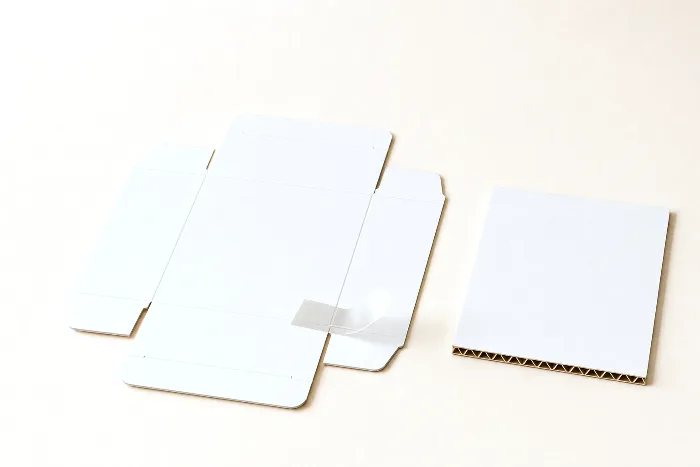
Litho-laminated corrugated (litho-lam). When a corrugated shipper or display needs the same photographic-quality graphics a carton gets, the artwork is printed offset on a paper or SBS facing sheet, then that printed sheet is laminated to single- or double-face corrugated board. The corrugated gives strength and stackability; the litho facing gives the graphics. It's the go-to for retail-ready displays, club-store multipacks, and premium e-commerce boxes where a directly printed corrugated (flexo post-print) can't reach the same fidelity. The trade is added lamination steps and cost, evaluated case by case rather than by a fixed rule.
Setting up files for offset
Offset rewards a clean, print-ready file. The essentials mirror general packaging prepress, with a few offset- specific habits. Full detail lives in our print-ready PDF guide; the short version:
- Keep the dieline separate. Cut, crease, and bleed belong on their own named layer or spot separation, not merged into the artwork.
- Work in CMYK plus named spots. Convert to the process/spot build the job will actually print; don't leave brand colors as RGB or as CMYK approximations when a spot is intended. See spot color vs CMYK for when to use each.
- Add bleed. Extend background art past every cut edge — around 3 mm is typical — so trimming never exposes bare board.
- Supply high-resolution images. Raster art at roughly 300 dpi at final size keeps offset's resolution advantage from being wasted on soft photos.
- Respect total ink coverage. Very heavy overlapping ink can flood on press; keep total area coverage within your printer's limit and trust their profile rather than piling on solids.
- Design for registration. Add trap or overprint where colors meet, and keep fine reversed type and hairlines off the tightest registration boundaries so normal drift never shows.
Getting color to behave across proof and press is its own discipline — characterizing to a reference condition and proofing to the actual substrate is covered in packaging color management.
Choosing offset vs other methods
A quick word on where we stand: PackOS doesn't sell a single press. We manufacture and quote across formats and processes, so we have no reason to push offset over anything else. The honest answer is that the right method is chosen by format, substrate, run length, number of versions, and color needs — not by which process is "best." Offset is the strong default for paperboard graphics; it is the wrong tool for a film pouch or a bare bottle.
| Job profile | Often the better fit | Why |
|---|---|---|
| High-graphics folding carton, medium-to-long run | Offset | Resolution, color fidelity, and consistency on board |
| Retail display or high-graphics shipper | Offset (litho-laminated to corrugated) | Carton-grade graphics on a strong corrugated structure |
| Short run or many versions on board | Digital | No plates, so setup doesn't dominate small quantities |
| Labels and flexible film at speed | Flexo or gravure | Web processes built for non-absorbent substrates |
| Decorate a bottle, jar, or tube directly | Screen or pad printing | Offset can't print a formed 3D container |
If you want to reason it through against your own spec rather than a table, our print method selector walks format, substrate, run length, and versions and points you to the process that fits.
How PackOS fits offset into a quote
PackOS reads your artwork or die file, detects the structure and specification, and maps it to a sensible production route — including the print process and substrate an offset carton or litho-lam job would take — then produces a photoreal proof and an instant quote from it. You don't have to name the method yourself; the system infers it from the format, board, and finishing the design implies, and you can adjust from there. See how the detection and quality checks run on the technology page, or put a real carton file through it with Quick Quote.
Frequently asked questions
Is offset the same as lithography or "litho" printing?
Yes. Offset lithography, offset, and litho all name the same process. Lithography refers to the plate chemistry, where grease and water keep the image and non-image areas apart, and offset refers to the mechanics, where the plate transfers ink to a rubber blanket that then prints the sheet rather than touching it directly.
Why is offset the standard for folding cartons?
Offset delivers high resolution and repeatable color on paperboard, so photographs, smooth gradients, and small type print crisply. It handles spot and metallic inks and inline coatings, and it holds color consistently across a run. That combination makes it the default for premium folding cartons.
What is litho-lamination, or litho-lam?
Litho-lamination is when artwork is printed offset on a paper or SBS facing sheet and that printed sheet is then laminated to corrugated board. The corrugated provides strength and stackability while the litho facing provides carton-grade graphics. It is used for retail-ready displays, club packs, and high-graphics shippers.
Can offset print on flexible films or directly on bottles?
No. Offset is built for paper and paperboard. Flexible films and foils are printed by flexo, gravure, or a purpose-built digital web press, and decorating a formed bottle, jar, or tube directly is done by screen or pad printing. Offset cannot print a non-absorbent web or a 3D container.
Offset or digital printing for cartons — which should I use?
It depends on run length and versions. Offset needs plates and make-ready, so its setup is best amortized over medium-to-long runs, while digital skips the plates and wins on short runs, many versions, and fast changes. Compare the two against your actual quantities rather than assuming one is always better.