
Plates, dies & tooling: the one-time costs explained
If a packaging quote has ever surprised you with a line for "plates," "dies," or "tooling," this is what you're actually buying: physical tools, built once for your specific artwork and shape, that the converter needs before a single unit can be made.
THE SHORT ANSWER
Plate charges, cutting dies, and cylinders are one-time tooling costs — you're paying for the physical tools built for your specific artwork and shape, not for the packaging itself. Once made, those tools are reused on every reorder, which is a structural reason reorders cost less than first orders.
- Printing tools — flexo plates, gravure cylinders, screens — are made per ink color, per artwork
- Cutting tools — steel-rule or rotary dies — are made per shape and size
- Reorders with unchanged artwork and dimensions typically skip the tooling line entirely
- Any artwork change re-plates the affected colors; a size or shape change means a new die
- Digital printing has no plates, which is why short runs and many-SKU jobs favor it
Paying for the job vs. paying for the tools
Every packaging quote contains two fundamentally different kinds of money. The first is recurring cost: material, press time, lamination, finishing, freight. You pay it on every run, and it scales with quantity. The second is one-time cost: the plates, cylinders, dies, and screens the converter must physically manufacture before your job can run at all. You pay it once — and then only again when something about the job changes.
The distinction matters because converters present tooling differently. Some itemize it as its own line. Others fold it into the unit price, which makes their first-run quote look cleaner and their reorder pricing harder to predict. When you compare two quotes, the first question to answer is whether you're looking at the same split between job and tools. (This is one of several structural cost drivers we cover in our buyer's guide to packaging cost.)
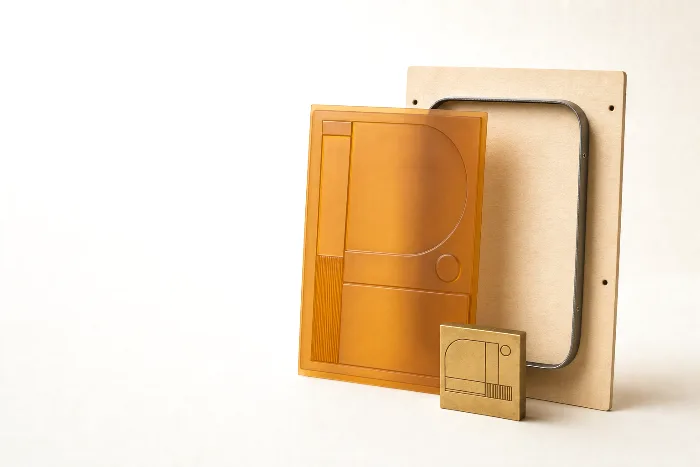
Tooling is genuinely physical. A flexographic plate is a sheet of photopolymer with your artwork standing in relief on its surface. A gravure cylinder is a steel cylinder with your image engraved into its chrome-plated skin, one cell at a time. A cutting die is a board with steel blades bent to the outline of your package. Someone machines, engraves, or fabricates each of these for your job specifically — which is why the charge exists, and why it doesn't repeat.
The tooling table: what each tool is and when you pay again
Here are the tools most likely to appear on a packaging quote, what each one physically is, and the events that put them back on your invoice.
| Tool | What it is | When you pay again |
|---|---|---|
| Flexo plates | Photopolymer relief plates mounted on the press — one plate per ink color, per design. The raised surface carries the ink. | Any artwork change re-plates every color that changed. Adding a color adds a plate. Plates also wear over very long service and are eventually remade. |
| Gravure cylinders | Steel cylinders, engraved with the image and chrome-plated — one per color. The most durable printing tool and the highest setup effort. | Artwork changes mean re-engraving. Because cylinders last through very long production lives, gravure suits designs that stay stable at high volume. |
| Cutting die | Steel-rule blades set into a flatbed board, or an engraved rotary die, that cuts the package or label shape out of the printed material. | A new shape or a new size means a new die. Artwork-only changes reuse the existing die untouched. |
| Emboss / deboss dies | Engraved metal dies (often brass) that press a raised or recessed texture into the substrate. | Any change to the embossed area — its artwork, position, or depth — requires a new engraving. |
| Foil stamping dies | Heated engraved dies that transfer metallic foil onto the sheet in the shape of the engraving. | Same trigger as emboss dies: change what's foiled, re-make the die. |
| Printing screens | Fine mesh stencils used in screen printing — one screen per color, with the image formed in the mesh. | Screens are made per design; artwork changes mean new screens for the affected colors. |
Notice the pattern: printing tools are keyed to artwork, cutting tools are keyed to shape. That one distinction predicts almost every re-tooling charge you'll ever see.
Why tooling amortizes — and why reorders are cheaper
Tooling behaves like a capital cost, not a consumable. The tools built for your first order sit at the converter and get pulled for every subsequent run of the same job. So the reorder quote skips the tooling line entirely — one of the structural reasons a reorder is cheaper than a first order, independent of any loyalty discount or negotiation.
This has two practical consequences for buyers:
- Don't judge a supplier on the first-order unit price alone. A quote that front-loads tooling honestly can look worse than one that hides it in the unit price — until the reorder, where the honest quote drops and the blended one doesn't.
- Think in lifetime volume. The real cost of a plate set is the charge divided by every unit you'll ever print from it. A design you expect to keep for years amortizes to almost nothing per unit; a design you'll change next quarter doesn't.
The corollary: artwork stability is a cost lever. Brands that lock their dieline and rotate only what's necessary re-tool less often than brands that redesign every season.
What triggers re-tooling
Tooling charges come back when the job changes. The common triggers, roughly in order of how often they surprise people:
- Any artwork change re-plates the changed colors. There is no "small edit" from the platemaker's perspective — moving a comma re-makes the plate for whichever color that comma prints in. If the edit touches an element built from several colors, several plates are remade.
- Adding an ink color adds a tool. A new spot color means a new plate, cylinder, or screen — plus a press station to run it.
- A size or shape change means a new cutting die. And because the artwork must reflow to the new dieline, it usually means new plates as well: a dimension change is effectively a full re-tool.
- Regulatory copy updates are a stealth trigger. Ingredient changes, warning-label revisions, and compliance-driven text edits are artwork changes like any other, and they re-plate the colors they touch.
- Substrate or process changes can invalidate plates. Plates are specified for a press, a mounting system, and a material behavior; moving the job to a different press or a meaningfully different substrate can require re-plating even with identical art.
Digital printing: when there are no plates at all
Digital presses form the image directly from the file on every impression — inkjet or electrophotography, with nothing physical made per design. No plates, no cylinders, no screens. The tooling line for printing simply disappears from the quote. (A cutting die may still apply, unless the shape is cut digitally or uses a standard die.)
That changes the economics qualitatively. Plate-based processes carry a fixed tooling cost that amortizes across volume, so their per-unit cost falls as runs get longer. Digital carries no tooling but a higher recurring cost per unit, so its price stays comparatively flat as volume grows. The result is a crossover: below some volume, digital wins; above it, flexo or gravure wins. Where that crossover sits depends on the job — colors, size, substrate, and finishing all move it — which is exactly the kind of comparison worth quoting both ways rather than guessing.
Digital's advantage compounds when artwork churns. Every version of a design on a plate-based press is its own plate set; on a digital press, versions are free at the tooling level. This is why jobs with many SKUs, frequent artwork updates, regional variants, or short product lifecycles gravitate to digital even when a long-run plate process would beat it on a single stable design.
Shared tooling, gang runs, and standard dies
Not every job pays for its own tools. Two arrangements spread or eliminate tooling cost:
- Standard dies. Converters keep libraries of cutting dies for common label sizes, carton styles, and pouch formats. Choose a shape that already exists in the library and the die charge vanishes — you're borrowing a tool that's already paid for. This is a big part of why standard sizes quote cheaper than custom ones, and why the cutting method itself matters — see our comparison of die-cut vs. kiss-cut labels.
- Gang runs. Multiple designs share one press run and one set of setup costs, with the sheet or web divided among them. Ganging your own SKUs — several flavors on one run — spreads plate and die costs across the family instead of paying per item.
The practical takeaway: before you commit to a custom shape, ask what standard tooling the converter already holds. A small compromise on dimensions can delete an entire line from the quote.
Questions to ask your converter about tooling
Tooling ownership and handling vary by converter and by contract — the time to pin it down is before the first order, not when you want to move a job. Ask:
- Who owns the tooling I'm paying for? Paying a plate or die charge doesn't automatically make the tool yours; ownership follows the agreement, not the invoice line.
- Is tooling itemized or built into the unit price? You need to know to compare quotes — and to predict what your reorder will cost.
- If I move suppliers, can I take my dies and plate files? Physical plates rarely transfer usefully between presses, but the artwork separations and die drawings should be yours to take.
- How long is tooling stored, and what happens after that? Converters store tooling for inactive accounts for a limited time; ask what the policy is rather than assuming.
- Which changes on my roadmap would trigger re-tooling? Walk through your planned artwork and size changes and get the re-tool consequences in writing.
- Do you have standard dies near my size? The cheapest die is the one that already exists.
How PackOS quotes tooling
PackOS treats tooling the way buyers need it treated: as its own visible line. When you upload artwork, the platform detects the dieline, counts the ink separations, and works out what tooling the job actually requires — how many plates, whether a standard die fits, whether the run and SKU count favor a digital route with no plates at all. The quote then shows one-time and recurring costs separately, so the first order and the reorder are both predictable before you commit. You can read how the pricing engine works on the technology page, or see your own job's tooling picture in about a minute with Quick Quote.
Frequently asked questions
What is a plate charge on a packaging quote?
A plate charge is the one-time cost of manufacturing the physical printing plates for your artwork — on a flexographic press, one plate per ink color. You are paying for a tool the converter builds for your specific design, not for the packaging itself, and it is not charged again while the artwork stays the same.
Do I pay for plates and dies again when I reorder?
Not if nothing changed. Tooling built for the first order is stored and reused, so a reorder with identical artwork, size, and material skips the tooling charges — a structural reason reorders cost less than first orders.
Who owns the printing plates and cutting dies I paid for?
It varies by converter and contract. Paying a tooling charge does not automatically transfer ownership, and physical plates rarely move usefully between presses anyway. Confirm ownership, storage policy, and what you can take with you before placing the first order.
Why doesn't digital printing have plate charges?
Digital presses form the image directly from the digital file on every impression, so nothing physical is manufactured per design. No plates, cylinders, or screens means no printing-tooling line on the quote, which is why short runs and jobs with many SKUs or frequent artwork changes favor digital.
What changes force me to buy new tooling?
Any artwork change re-plates every color that changed, even a small text edit. Adding an ink color adds a plate. A size or shape change requires a new cutting die, and usually new plates too, because the artwork reflows to the new dieline.