
Pouch vs rigid packaging: an honest trade-off
Stand-up pouches keep taking share from bottles, jars, and cans — but "switch everything to pouches" is bad advice roughly as often as it is good. This is the two-sided version, written by a team that manufactures rigid containers and quotes flexible packaging.
THE SHORT ANSWER
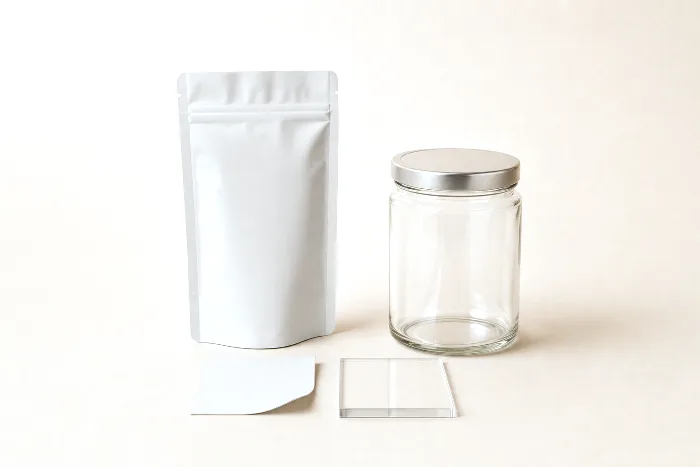
There is no universally best format. The deciding factor is what your product needs to survive and how your brand needs to sell. Pouches win where material use, shipping weight, and shelf flexibility matter most; rigid wins where structural protection, refill and reuse, a premium feel, or easy single-resin recycling matter most. Decide from the product and the channel, not from a trend.
- Pouches — less material, ship flatter and lighter, flexible shapes and sizes, a strong laminate barrier
- Rigid — crush and puncture resistance, refill and reuse, premium shelf presence, easy single-resin recycling
- The real deciding factor — the product's protection needs, the brand's positioning, and your own freight math
- Our vantage — we make rigid and quote flexible, so this is a trade-off, not a sales pitch
Why there's no universal winner
Full disclosure before we compare anything: Calyx Containers, the company behind PackOS, manufactures rigid containers, and PackOS quotes labels and flexible packaging — pouches included. We sell both sides of this decision. That is exactly why we can write it straight: we don't need you to land on a particular format, we need you to land on the right one. So take this as an honest trade-off, not a pitch for the format we happen to make.
The format that is "best" in the abstract does not exist. Almost every article that tells you pouches are always cheaper, or that rigid always protects better, is quietly selling one format. The real answer is a trade-off across a handful of factors — protection, barrier, cost to ship, shelf presence, refill, and recyclability — and different products land on different sides of each one. A single-serve coffee brand and a premium face serum can both be "right," and end up in opposite packages.
What "pouch" and "rigid" actually mean
A pouch is flexible packaging: a bag formed from a thin, layered film that is sealed at the edges rather than molded into a fixed shape. A stand-up pouch adds a bottom gusset so it can stand on shelf, and often a press-to-close zipper, a tear notch, or a spout fitment. Its performance is decided almost entirely by its laminate structure — the specific layers of film chosen for printing, barrier, and sealing. For the full menu of flexible formats see our guide to flexible packaging types, and for building one to spec, the stand-up pouch spec guide.
Rigid packaging is self-supporting: bottles, jars, tubs, cans, and vials formed from a material stiff enough to hold its own shape — glass, aluminum, or a molded plastic such as PET, HDPE, or PP. It keeps its geometry empty or full, resists external load, and gives you a hard, repeatable opening to dispense through. Our rigid packaging guide covers the container families in depth. The useful mental model: a pouch protects its contents from the inside out, through barrier film; a rigid container protects from the outside in, through structure.
The honest trade-off, factor by factor
Here is the comparison with both columns filled in fairly. Read down the factor that matters most for your product first — that factor usually makes the decision, and the rest are tie-breakers.
| Factor | Pouch | Rigid |
|---|---|---|
| Product protection | Flexible; little resistance to crushing or puncture. Fine for durable, non-fragile contents. | Strong; resists crushing, punctures, and stacking load. Best for fragile or heavy contents. |
| Barrier & shelf life | Excellent oxygen and moisture barrier is achievable through the laminate — often on par with rigid. | Very good, especially glass and metal; barrier is inherent rather than engineered layer by layer. |
| Cost to ship | Ships flat and light; less material and cube per unit tends to lower shipping weight. | Heavier and takes cube even before filling; nests and stacks but rarely flat. |
| Shelf presence | Flexible size and shape, matte or glossy finishes; reads as modern, casual, or eco. | Hard edges, weight in hand, and clarity read as premium and trustworthy. |
| Refill & reuse | Common as a lightweight refill for a durable rigid vessel; not itself reused. | Can be refilled or returned and reused many times, spreading its cost and footprint. |
| Recyclability | Hard when multi-material; much better as a mono-material pouch where a stream accepts it. | Single-resin bottles, glass, and aluminum are widely accepted and often easiest to recycle. |
| Fill & dispensing | Great for powders, granules, and liquids with a fitment; pours less precisely without a spout. | Rigid openings, pumps, droppers, and closures give precise, repeatable dispensing. |
Notice that neither column is empty and neither is all wins. A pouch is not a worse bottle and a bottle is not a failed pouch — they are different tools. This is the same lens we apply across the whole guide to choosing the right packaging: match the format to the job, not to the headline.
Protection, barrier, and shelf life
These two often get conflated, so separate them. Structural protection is about surviving the physical journey — being dropped, stacked, squeezed in a tote, or thrown on a porch. Rigid wins here without much debate: a jar shrugs off loads that would burst or deform a pouch. If your product is fragile, or if it ships loose in ecommerce boxes and takes abuse, structure is doing real work.
Barrier is a different question — keeping oxygen, moisture, light, and aroma in or out to protect shelf life. Here the gap is smaller than people assume. A well-designed pouch laminate can deliver an oxygen and moisture barrier that rivals a rigid container, which is why coffee, snacks, pet food, and supplements moved to pouches so successfully. The barrier lives in the film layers, so it is a design choice, not a limitation of the format. What a pouch cannot easily match is the inherent, decoration-independent barrier of glass and metal, or the ability to survive a high vacuum or retort without a purpose-built structure. Get the laminate right and shelf life is rarely the deciding factor; get it wrong and it is the only one.
Cost, weight, and freight
This is where the internet lies to you most, with confident figures it cannot possibly know for your product. We won't. What we can tell you is the direction of the drivers. Pouches use less material per unit and ship flat, so both the material cost and the shipping weight tend to come out lower than an equivalent rigid container — sometimes dramatically, because you are not paying to move empty air and thick walls. That is the honest case for the pouch on cost.
But direction is not the same as a number, and the number can flip. At low volume, pouch tooling and order minimums can absorb the per-unit savings; a stock rigid container you buy off the shelf may beat a custom pouch until you scale. Barrier requirements, decoration, fitments, and freight lane all move the total. And if a rigid format lets you run a refill or returnable program, its cost is spread over many uses rather than one. The only trustworthy comparison is your own: run your real weights and dimensions through the dimensional weight calculator to see how each format bills on your lanes, then get an actual quote for both — the material and tooling math is what settles it, not a blog's invented savings.
Recyclability, both ways
Sustainability cuts in both directions, and the honest answer depends on what your local stream actually accepts. The classic knock on pouches is real: a traditional laminate that combines different plastics, or adds a foil layer, is difficult to recycle in most curbside programs because the layers can't be easily separated. That is a genuine mark against the format.
But the picture is moving. Mono-material pouches — engineered around a single resin family so they can be processed as one material — narrow the gap considerably where the infrastructure to collect and sort film exists. On the rigid side, a single-resin bottle or jar, clear glass, or aluminum is often the easiest of all to recycle, with mature collection streams behind it — though it carries more material and weight to begin with, which is its own footprint. So the greenest choice is not automatic: a light mono-material pouch and a highly recycled single-resin bottle can both be defensible. Weigh total material against end-of-life acceptance, and see our sustainable packaging guide for the full framework rather than a slogan.
How to make the call for your product
Turn the trade-off into a decision by answering these in order. The first question that gives you a hard "no" usually names your format:
- Does the product need structure to survive its journey? Fragile, heavy, or rough-handled contents lean rigid. Durable powders, granules, and sealed liquids are comfortable in a pouch.
- What barrier and shelf life does it demand? If a laminate can deliver the oxygen and moisture barrier you need, the pouch stays in play; if only inherent glass or metal barrier will do, lean rigid.
- How does the brand need to feel on shelf? Premium weight and clarity favor rigid; modern, casual, or refill-forward positioning favors pouches.
- Is refill or reuse part of the model? A durable rigid vessel plus lightweight pouch refills is a common, genuinely strong combination — you don't always have to pick one.
- What does your real freight and volume math say? Run your numbers rather than a generic claim, and quote both formats at your actual quantity.
If your answer points to flexible, the next fork is how the pouch is supplied — decide between premade pouches and rollstock based on your volume and filling setup. If it points to rigid, the container guide takes it from there.
How PackOS helps you decide. Upload artwork, a spec, or a previous quote and PackOS detects the structure, rebuilds an editable dieline, and prices it — so you can quote a pouch and a rigid option side by side on your own product and quantity instead of arguing about generic numbers. That reconstruction and quoting engine is described on the technology page; because both formats resolve to the same measured spec and material math, the comparison you get is grounded in your file, not a template.
Frequently asked questions
Is a pouch cheaper than a rigid container?
It depends on the driver, not the format. Pouches usually use less material and ship flatter and lighter, which can lower material and freight cost, but tooling, order quantity, barrier requirements, and decoration all move the number. Rigid can win where a returnable or refillable container spreads its cost over many uses, or at volumes where its tooling is fully absorbed. Run your own product and quantity through a real quote rather than trusting a generic figure.
Which protects the product better, a pouch or a rigid container?
Rigid containers resist crushing, punctures, and stacking loads, so they suit fragile contents and anything that has to survive rough handling. Pouches protect mainly through their laminate barrier and sealed edges, which is excellent against oxygen and moisture but offers little structural rigidity. Match the format to the hazard the product actually faces on its route to the shelf.
Are stand-up pouches recyclable?
Some are and some are not. A multi-material laminate that combines different plastics or a foil layer is hard to recycle in most curbside streams, while a mono-material pouch designed around a single resin family is far easier to process where the infrastructure exists. A single-resin rigid bottle or jar is often the easiest of all to recycle. Check what your local stream actually accepts and design toward it.
Can a pouch replace a bottle or jar?
Often, but not always. Pouches work well for powders, granules, many liquids with the right fitment, and refill formats, and they cut material and shipping weight. A bottle or jar still wins where you need rigidity, a resealable rigid opening, a premium shelf feel, or an easy-to-recycle single resin. The right answer depends on the product, the channel, and the brand.
Does PackOS make pouches or rigid containers?
Both sides of this comparison sit inside one company. Calyx Containers manufactures rigid containers, and PackOS quotes labels and flexible packaging including pouches. That is why the comparison is written as a genuine trade-off rather than a pitch for one format, and why the honest answer is always to match the format to your product.